Experts doubt China will lift bitcoin mining ban despite uptick and excess energy supply


When China imposed its sweeping bitcoin mining ban in 2021, many thought the country had closed the door on industrial-scale mining for good. Hashrate briefly collapsed, major farms packed up for North America and Central Asia, and Beijing framed the move as a win for financial stability and carbon reduction. For a moment, it looked like China had permanently surrendered its dominant role in the Bitcoin network.
Four years later, the story is far more complicated. Data from industry trackers now show that China has quietly climbed back to roughly third place in global bitcoin mining power, accounting for around 14–20% of the network’s hashrate. Miners are once again concentrating in energy-rich provinces such as Xinjiang and Sichuan, where electricity is cheap and local officials are eager to monetize excess energy supply and overbuilt data-center infrastructure.
Despite this revival, most analysts and policy experts believe Beijing is unlikely to formally lift the China bitcoin mining ban in the near term. Instead, the country appears to be drifting toward an uneasy compromise: tolerate some mining in the shadows where it serves local economic interests, while maintaining a national-level prohibition that aligns with climate pledges, capital-control objectives and political messaging.
This tension between rising underground activity and a stubborn policy line raises important questions. Why is mining surging again if it is banned? Why do experts still doubt that China will formally reverse course, despite stranded energy and clear economic incentives? And what does this strange status quo mean for global bitcoin mining, energy debates and the long-term distribution of hashrate?
How China’s bitcoin mining ban began
From mining powerhouse to official zero
Before the crackdown, China was the beating heart of global bitcoin mining. Estimates from multiple sources suggested that Chinese miners controlled more than 60% of the network’s hashrate, drawn by ultra-cheap hydropower in rainy-season Sichuan and Yunnan, as well as coal-fired energy in Inner Mongolia and Xinjiang.
In 2021, however, Beijing’s attitude hardened. First came regional campaigns against “energy-wasting” projects, then a central government declaration that crypto mining and trading would be phased out nationwide. By September 2021, the People’s Bank of China had banned all cryptocurrency transactions, and the state planning agency formally included bitcoin mining on its list of eliminated industries.
Officials justified the crackdown on several grounds. They warned that speculative crypto markets could threaten financial stability and facilitate capital flight. They also linked bitcoin mining to climate concerns, arguing that coal-heavy operations clashed with China’s carbon-reduction goals and might encourage illegal coal extraction.
For a brief period, the policy appeared to work exactly as intended. Chinese hashpower fell sharply, miners dismantled farms or shipped rigs overseas, and global bitcoin mining rapidly rebalanced toward the United States, Russia, Kazakhstan and other hubs.
Mining quietly returns despite the ban
Underground operations and “AI” data centers
Fast-forward to late 2025, and the landscape looks very different. Industry trackers, research firms and miners themselves now estimate that China controls around 14–20% of global bitcoin hashrate, once again ranking it as the world’s third-largest mining hub.
This resurgence is not happening through public, proudly advertised mining parks. Instead, underground bitcoin mining in China has taken on a more covert form. Miners often register their facilities as generic data centers or label their operations as artificial intelligence, cloud or “big data” infrastructure to avoid obvious regulatory scrutiny. Intelligence from rig manufacturers and local observers suggests that these disguised facilities are proliferating in energy-abundant regions.
Reports describe miners in Xinjiang and Sichuan tapping into low-cost electricity, particularly where transmission bottlenecks make it difficult to export power to coastal demand centers. One private miner in Xinjiang told reporters that “you consume excess electricity in the form of crypto mining,” highlighting how mining is being used as a flexible demand sink for stranded energy.
Mining hardware sales confirm the uptick
Sales data from mining rig manufacturers echo the story told by hashrate metrics. Canaan, one of the world’s largest bitcoin mining machine makers, has reported a sharp rebound in China-sourced revenue. China’s share of its sales, which had collapsed to low single digits after the 2021 crackdown, has surged to more than 30%, and internal estimates suggest Chinese customers may now account for over half of some recent quarters.
Analysts at multiple firms now estimate that somewhere between 14% and 25% of global bitcoin hashrate is again physically located inside China, even if much of it is routed through foreign-registered mining pools or obscured by VPNs. This is the paradox at the heart of today’s debate. The China bitcoin mining ban remains officially in place, and yet the country has quietly re-emerged as a mining heavyweight.
Excess energy supply and overbuilt infrastructure
Stranded power in energy-rich provinces
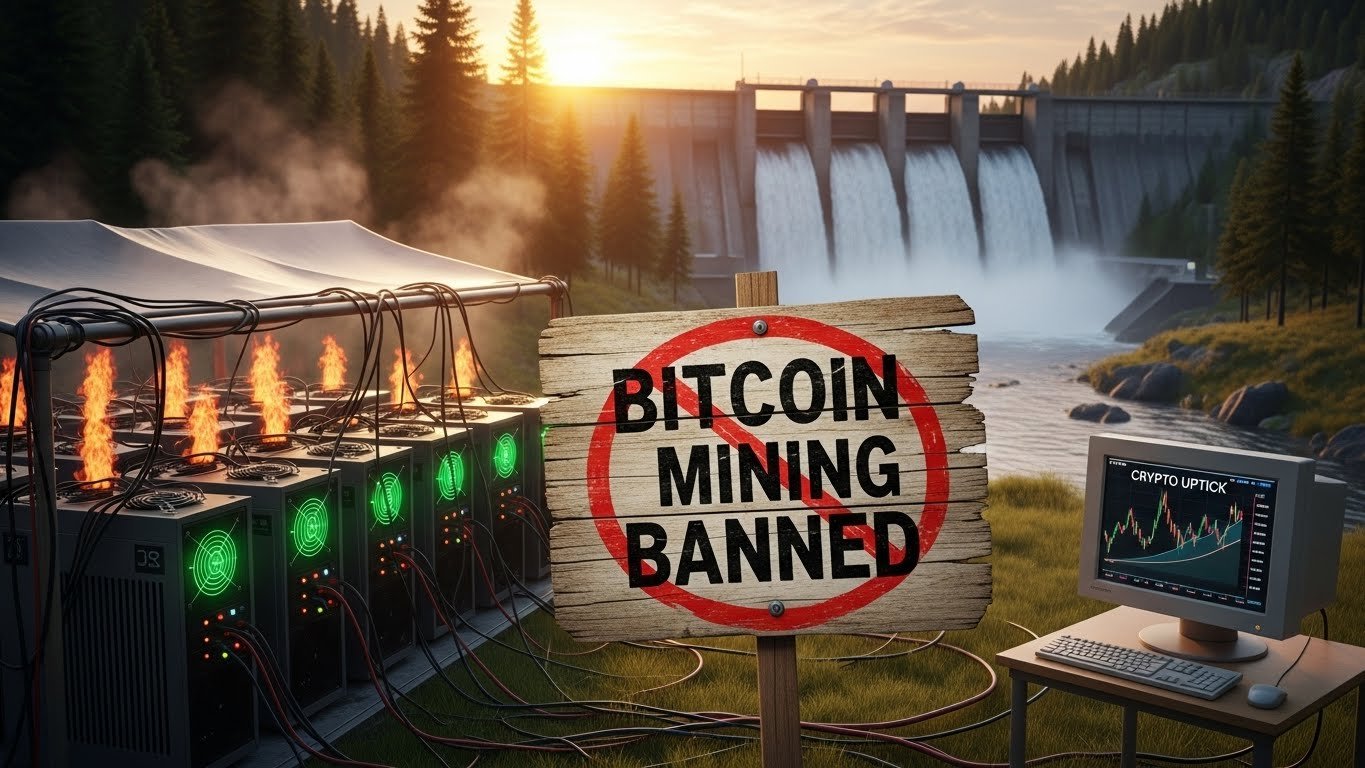
One of the main drivers behind the mining resurgence is a simple economic reality: China has a lot of excess energy supply, particularly in its interior provinces. Over the past decade, massive investments in coal, hydro and renewables created more generation capacity than some regions can profitably export. Transmission constraints and uneven demand mean that gigawatts of power are sometimes curtailed or sold at very low prices.
Bitcoin mining, as many miners like to point out, is essentially a way to turn otherwise wasted energy into digital value. If electricity cannot be easily transmitted to urban centers but is cheap at the source, mining rigs can be dropped directly next to generation sites and run whenever power is available.
In Xinjiang, Sichuan and other provinces, this logic has proved irresistible. Local entrepreneurs and some corporate actors see mining as a way to monetize stranded hydroelectric, wind or coal capacity, especially when bitcoin prices are high enough to make the economics compelling.
Over-investment in data centers
Another ingredient is China’s aggressive push into cloud computing and data infrastructure. Some local governments, eager to show growth, encouraged large-scale data-center construction with cheap land and electricity. In hindsight, this led to overcapacity in certain regions.
Industry reports now describe miners renting space in or near these facilities, sometimes under the guise of AI or generic compute workloads. In effect, the same overbuilt data-center boom that planners hoped would support digital transformation is now partially feeding underground bitcoin mining.
Why experts doubt Beijing will lift the mining ban
Given the clear economic incentives and the apparent softening of enforcement in some provinces, it might seem logical to assume that China will eventually lift its formal bitcoin mining ban. Yet most policy watchers and legal scholars remain skeptical. They point to several structural reasons why a full reversal remains unlikely, even as activity grows in the shadows.
Capital controls and financial sovereignty
First, Bitcoin is still viewed in Beijing as a potential vector for capital flight and financial instability. The ability to turn local electricity and hardware into a globally traded, censorship-resistant asset is precisely what makes bitcoin mining attractive to entrepreneurs—and problematic to a government that tightly manages its financial system and currency.
Lifting the mining ban would send a signal that China is comfortable with large-scale, permissionless asset creation tied to a borderless network. That would sit awkwardly alongside its long-running efforts to promote the digital yuan, maintain tight control over cross-border flows and keep speculative manias in check. Even if officials privately accept that mining cannot be fully eradicated, openly welcoming it back would contradict years of messaging about the dangers of decentralized cryptocurrencies.
Climate commitments and the green narrative
Second, the ban is tightly bound to China’s climate narrative. In official statements, regulators emphasized that bitcoin mining was incompatible with the country’s carbon-reduction goals and risked undermining targets for peak emissions and carbon neutrality. Coal-heavy operations in places like Inner Mongolia were singled out as especially harmful.
While some of the new underground mining uses curtailed hydropower or renewables, a significant share still draws on coal and mixed grids. Formally endorsing a return to large-scale mining would hand critics an easy talking point: that China is sacrificing climate goals for short-term profit.
Given how closely environmental policy is tied to political legitimacy and global diplomacy, many experts believe Beijing will prefer the current ambiguity—allowing some mining where it is economically attractive, but keeping the official ban as a shield against accusations of backsliding.
Regulatory consistency and political “face”
A third factor is reputational. The 2021 China bitcoin mining ban was presented as a decisive, permanent move to “eliminate” an undesirable industry. Reversing it openly would not only require bureaucratic U-turns; it would also risk making earlier high-profile campaigns look misguided or ineffective.
In a system where maintaining authority and consistency is highly valued, quietly tolerating some mining is easier than publicly rewriting the rules. As long as mining remains officially banned, regulators retain the option to selectively crack down when they wish—whether to make political points, respond to media attention or discipline particular regions.
Preference for controlled digital finance
Finally, China has been clear that it prefers controlled, state-aligned forms of digital finance—such as the digital yuan and, potentially, yuan-backed stablecoins—over permissionless crypto assets like Bitcoin. Recent moves to support a regulated stablecoin framework in Hong Kong and discussions about using RMB-backed stablecoins to promote the currency globally illustrate where policymakers want innovation to occur.
In that context, bitcoin mining looks like an uncomfortable outlier: an energy-intensive industry that generates a foreign, volatile asset outside direct state control. Even with excess energy supply, experts doubt that policymakers will risk undermining this strategic direction just to capture mining tax revenue or power demand.
A likely path: soft tolerance, not formal legalization
De facto regional flexibility
Putting these factors together, most analysts expect China to continue along its current path of de facto flexibility. At the national level, the bitcoin mining ban remains in force, reinforcing capital controls and climate messaging. At the regional level, enforcement is uneven, with some provinces quietly tolerating mining where it aligns with local economic interests and does not attract too much attention.
This pattern is not unusual in China. Observers often note that “policy flexibility” emerges when strong economic incentives are concentrated in particular areas. Bitcoin mining fits that description perfectly: highly profitable when prices are high, geographically tied to energy sources, and relatively easy to hide within existing industrial categories.
Quiet support industries and hardware leadership
Meanwhile, activities around mining that do not directly violate the ban are flourishing openly. Research, development and manufacturing of mining rigs remain legal, and Chinese companies continue to dominate the global hardware supply chain. Canaan and other manufacturers are leveraging domestic demand and export markets, proving that China can benefit from the bitcoin mining industry without formally embracing mining itself.
Legal experts inside China have also pointed out that while running mines is risky, providing certain types of technical services or hosting compute infrastructure in a compliant way may occupy grey zones. This creates a surrounding ecosystem that can quietly support mining, even if the word “mining” rarely appears on official business registrations.
Global implications of China’s shadow mining comeback
Hashrate distribution and network resilience
For the Bitcoin network, China’s unexpected return to a significant share of global hashrate is a mixed blessing. On the one hand, it demonstrates the resilience and adaptability of miners, who continue to seek the lowest-cost energy regardless of regulatory headwinds. On the other hand, it raises old concerns about geographic concentration and the risk that policy shifts in a single country could again shock the network.
The difference now is that Chinese mining is more distributed and less publicly visible than during its pre-ban peak. Many operations are smaller, more mobile and more adept at masking their activities. This may actually make the network more robust against a single, sweeping crackdown, but it also makes transparency and monitoring more difficult.
Energy debates and ESG narratives
China’s mining resurgence also feeds into ongoing debates about Bitcoin’s environmental footprint. Supporters argue that tapping excess energy supply and curtailed hydropower in provinces like Sichuan reduces waste and does not necessarily increase net emissions. Critics point out that coal-heavy grids and opaque operations make it hard to verify how green the resurrected hashrate really is.
Either way, the comeback undermines simplistic narratives that the 2021 bitcoin mining ban permanently “cleaned up” the network by pushing all hashing to greener jurisdictions. In reality, mining continues to flow toward whatever mix of energy and regulation produces the highest margins.
Strategic lessons for miners and policymakers
For miners outside China, the lesson is clear: regulatory risk never fully disappears, but underground bitcoin mining in large economies can return faster than expected when the incentives are strong. Over-reliance on any single jurisdiction remains risky, even if current conditions look favourable.
For policymakers, China’s experience is a case study in the limits of blanket bans. Despite aggressive enforcement in 2021, mining is back in force by 2025, adapted but far from eliminated. This may encourage other countries to consider more nuanced approaches—such as targeted regulation, taxation and transparency rules—instead of outright prohibitions that can drive activity into the shadows without erasing it.
Conclusion
The headline “Experts doubt China will lift bitcoin mining ban despite uptick and excess energy supply” captures a central paradox of today’s mining landscape. On paper, China still enforces one of the world’s strictest stances against bitcoin mining. In practice, it has quietly re-emerged as a major contributor to global hashrate, powered by cheap electricity, overbuilt infrastructure and a patchwork of regional enforcement.
Most analysts believe this uneasy equilibrium will persist. Politically, Beijing has strong reasons to maintain the bitcoin mining ban: capital controls, climate commitments, reputational consistency and a strategic preference for controllable digital finance. Economically, local officials and entrepreneurs in energy-rich provinces have plenty of motivation to keep mining alive in creative forms, especially when Bitcoin’s price is strong and excess energy supply would otherwise go to waste.
For the Bitcoin ecosystem, China’s shadow comeback is both a reminder of the network’s resilience and a warning about the persistence of concentration risks. Miners, investors and policymakers will need to navigate a world where formal rules and on-the-ground realities do not always match—and where a country that “banned” mining still plays a central role in securing the world’s largest cryptocurrency.
FAQs
Q: Is bitcoin mining still officially banned in China?
Yes. At the national level, bitcoin mining remains officially banned in China. The 2021 crackdown classified mining as an eliminated industry and was paired with a broad prohibition on cryptocurrency transactions. Those policies have not been formally reversed. However, enforcement is uneven. In practice, significant mining activity has quietly returned in certain provinces, often disguised as data-center or AI workloads, which creates a gap between the formal ban and on-the-ground reality.
Q: Why has bitcoin mining activity in China increased again if it is banned?
Mining activity has rebounded mainly because the economic incentives are strong. China has substantial excess energy supply in regions like Xinjiang and Sichuan, where electricity can be very cheap or even curtailed. Bitcoin mining allows operators to turn that stranded energy into revenue, especially when bitcoin prices are high. Overbuilt data centers and flexible computing infrastructure also make it easier to host mining operations under generic categories, helping miners avoid direct regulatory scrutiny while still benefiting from local energy advantages.
Q: What share of global bitcoin hashrate does China have today?
Estimates vary, but multiple industry trackers and research firms suggest that China now accounts for roughly 14–20% of global bitcoin hashrate. That makes China the world’s third-largest mining hub again, despite the official China bitcoin mining ban. Because many operations are underground and use methods such as VPNs or foreign-registered pools, precise numbers are difficult to verify, but the consensus is that China has reclaimed a meaningful slice of the network’s computational power.
Q: Could China eventually lift the bitcoin mining ban?
Most experts are skeptical that Beijing will fully lift the ban in the near term. They point to concerns about capital flight, financial stability and uncontrolled speculation, as well as the government’s climate commitments and desire to project policy consistency. There is also a strategic preference for state-directed digital finance, such as the digital yuan and potentially yuan-backed stablecoins, rather than permissionless crypto assets. China may continue to tolerate some mining in the shadows where it serves economic interests, but a clear, national-level green light for bitcoin mining would require a major shift in priorities and messaging.
Q: How does China’s stance on mining affect global bitcoin investors?
For global investors, China’s stance has several implications. The resurgence of mining there increases total hashrate, which strengthens the security of the Bitcoin network but also reintroduces some geographic concentration risk. The fact that mining can rebound despite a formal ban shows that blanket prohibitions may not permanently remove hashing from a country; instead, they can push it underground and make it harder to track. Investors who care about environmental, social and governance factors must also consider the uncertain energy mix behind Chinese mining. Overall, China’s complex posture—ban on paper, activity in practice—remains a key variable in the long-term decentralization and stability of bitcoin mining worldwide.