Crypto news: Bitcoin returns to gains in 2026 Will the U.S. seize 600,000 BTC from Venezuela?
Crypto news 2026 highlights Bitcoin’s return to gains and rising questions over whether the U.S. could seize 600,000 BTC from Venezuela

The global cryptocurrency market has entered 2026 with renewed momentum, and crypto news headlines are once again dominated by Bitcoin’s price recovery and rising geopolitical questions. After a volatile period marked by regulatory uncertainty, macroeconomic tightening, and shifting investor sentiment, Bitcoin has returned to gains, restoring confidence among traders, institutions, and long-term holders. At the same time, a controversial topic has emerged in crypto news circles: whether the United States could seize an estimated 600,000 BTC allegedly linked to Venezuela. This combination of market optimism and geopolitical tension makes 2026 one of the most pivotal years in the evolution of digital assets.
Bitcoin’s resurgence is not happening in isolation. It reflects broader changes in global finance, including easing monetary conditions, increased institutional adoption, and a deeper understanding of blockchain-based assets. Meanwhile, the discussion around Venezuela and potential U.S. action highlights how cryptocurrencies are no longer confined to speculative trading but have become intertwined with international law, sanctions, and state-level economic strategies. This article explores Bitcoin’s return to gains in 2026, analyzes the forces driving the market, and examines the complex question of whether the U.S. could realistically seize such a massive amount of Bitcoin from Venezuela.
Bitcoin’s Return to Gains in 2026: A Market Overview
Bitcoin’s price recovery in 2026 marks a significant shift from the uncertainty that defined previous years. Crypto news analysts point to a combination of technical strength and fundamental improvements that have helped Bitcoin regain its upward trajectory. After consolidating for months, Bitcoin began showing higher lows and renewed buying pressure, signaling a return of bullish sentiment across the market.
One of the most important drivers of this recovery has been improved macroeconomic stability. As inflation pressures eased in major economies and central banks adopted more predictable policies, risk assets benefited, and Bitcoin was no exception. Often described as digital gold, Bitcoin once again attracted investors seeking a hedge against currency debasement and long-term economic uncertainty. This narrative has become stronger in 2026 as governments continue to manage high debt levels and evolving fiscal challenges.
Another key factor has been growing confidence in Bitcoin’s infrastructure. Network security remains robust, hash rate levels are near record highs, and transaction efficiency has improved through scaling solutions. These developments reinforce Bitcoin’s position as the leading cryptocurrency market asset and a benchmark for the entire digital asset ecosystem.
Institutional Adoption and Its Impact on Bitcoin Prices
Institutional participation has played a crucial role in Bitcoin’s return to gains. In recent crypto news, large financial institutions, asset managers, and even pension funds have expanded their exposure to Bitcoin, viewing it as a legitimate alternative asset rather than a fringe experiment. This shift has brought greater liquidity, reduced extreme volatility, and added long-term credibility to the market.
The presence of institutional investors has also influenced market behavior. Rather than short-term speculation, much of the new demand is driven by strategic allocation decisions. Institutions tend to hold Bitcoin as part of diversified portfolios, which supports price stability during market pullbacks. This trend has strengthened the perception of Bitcoin as a store of value and reinforced its role within blockchain technology–driven finance.
Moreover, regulatory clarity in several major economies has encouraged institutional entry. Clearer guidelines around custody, taxation, and compliance have reduced operational risks, making it easier for traditional finance to engage with crypto assets. As a result, Bitcoin’s price action in 2026 reflects a more mature market structure compared to earlier cycles.
Retail Investors and Renewed Confidence in Crypto Markets
While institutions have been influential, retail investors are also returning to the market. Crypto news sentiment indicators show rising engagement from individual traders, driven by Bitcoin’s visible recovery and broader awareness of digital assets. Many retail participants who remained cautious during previous downturns now see 2026 as a renewed opportunity.
Social platforms, mainstream media, and educational resources have improved understanding of Bitcoin’s fundamentals. This has reduced panic-driven selling and encouraged longer holding periods. Retail investors increasingly recognize the importance of macro trends, network fundamentals, and adoption metrics rather than relying solely on short-term price movements.
This renewed confidence has spilled over into the broader crypto ecosystem. As Bitcoin leads the market higher, altcoins and related blockchain projects benefit from increased liquidity and attention. However, Bitcoin remains the primary focus of crypto news, serving as the gateway asset for most participants entering or re-entering the market.
Geopolitical Dimensions of Bitcoin in 2026
Beyond market dynamics, Bitcoin’s role in geopolitics has become a defining theme in crypto news. Governments now recognize that cryptocurrencies can influence capital flows, sanctions enforcement, and national economic strategies. This reality has brought Bitcoin into discussions traditionally reserved for fiat currencies and sovereign reserves.
In 2026, Bitcoin is no longer viewed solely as a decentralized experiment but as a strategic asset with global implications. Countries facing economic pressure or limited access to international financial systems have explored cryptocurrencies as alternative tools. This context is essential to understanding the debate around Venezuela and the alleged holdings of 600,000 BTC.
Understanding Venezuela’s Bitcoin Connection
Venezuela’s relationship with cryptocurrencies has been shaped by years of economic hardship, hyperinflation, and international sanctions. Crypto news reports over the years have highlighted how digital assets were used within the country as a means of preserving value and facilitating cross-border transactions when traditional systems were restricted.
The claim that Venezuela may control or be linked to approximately 600,000 BTC is controversial and not universally confirmed. Estimates vary widely, and much of the discussion is based on assumptions about past mining operations, state-controlled crypto initiatives, and indirect exposure through intermediaries. Nevertheless, the figure has captured attention due to its sheer scale and potential implications for global Bitcoin supply.
If such holdings exist, they would represent a significant portion of Bitcoin’s circulating supply, making the issue highly relevant to market participants. Crypto news analysts closely monitor these developments because any large-scale seizure, sale, or transfer could impact price dynamics and investor sentiment.
Can the U.S. Legally Seize Bitcoin from Venezuela?
The question of whether the U.S. could seize 600,000 BTC from Venezuela is complex and involves legal, technical, and geopolitical considerations. Unlike traditional assets, Bitcoin is decentralized and does not reside within a single jurisdiction. Ownership is determined by control of private keys, not by registration with a central authority.
From a legal perspective, asset seizure typically requires jurisdictional authority and enforcement mechanisms. While the U.S. has previously seized cryptocurrencies linked to illicit activities, those cases often involved exchanges, custodial services, or individuals operating within or connected to U.S. jurisdiction. Seizing Bitcoin allegedly linked to a foreign state presents far greater challenges.
Technically, without access to private keys, seizure is impossible. Even with legal claims, the decentralized nature of Bitcoin limits the ability of any government to unilaterally confiscate assets held securely outside its reach. This reality underscores why crypto news often emphasizes Bitcoin’s resistance to censorship and confiscation.
Sanctions, Enforcement, and the Role of Blockchain Transparency
Blockchain transparency adds another layer to the discussion. While Bitcoin transactions are pseudonymous, they are recorded on a public ledger. This allows analysts to track movements and identify patterns, which can support enforcement efforts related to sanctions and compliance.
In 2026, advanced blockchain analytics tools enable governments to monitor suspicious activity more effectively. However, monitoring does not equate to control. Even if wallets associated with Venezuela were identified, taking possession of the assets would still require access to private keys or cooperation from custodians.
This distinction is critical in crypto news debates. Bitcoin’s transparency enables oversight, but its decentralized security model limits direct intervention. As a result, discussions about seizure often highlight the tension between regulatory ambitions and technological realities.
Market Reactions to Seizure Speculation
Speculation about a potential U.S. seizure of Venezuelan Bitcoin holdings has generated mixed reactions in the market. Some investors worry about the possibility of large amounts of BTC entering circulation if seized and sold, which could create short-term price pressure. Others argue that such fears are overstated, given the practical difficulties involved. Historically, when governments have seized Bitcoin and later auctioned it, markets have absorbed the supply with limited long-term impact. In 2026, Bitcoin’s market depth and liquidity are significantly greater than in earlier years, reducing the likelihood of sustained disruption.
Crypto news sentiment suggests that most investors view the seizure debate as a geopolitical issue rather than an immediate market threat. Bitcoin’s return to gains reflects confidence in its long-term fundamentals rather than concern over hypothetical scenarios.
Bitcoin as a Strategic Asset in Global Finance
The events of 2026 reinforce Bitcoin’s status as a strategic asset within global finance. Its ability to operate independently of national borders, combined with increasing adoption, positions it uniquely among financial instruments. This has attracted both private investors and state-level attention.
For some countries, Bitcoin represents an opportunity to diversify reserves and reduce reliance on traditional systems. For others, it poses regulatory and enforcement challenges. This duality ensures that Bitcoin remains at the center of crypto news and policy discussions worldwide. As Bitcoin continues to mature, its interaction with geopolitics will likely intensify. The Venezuela debate may be one of many cases where digital assets intersect with international relations, sanctions, and economic strategy.
The Broader Crypto Market Outlook for 2026
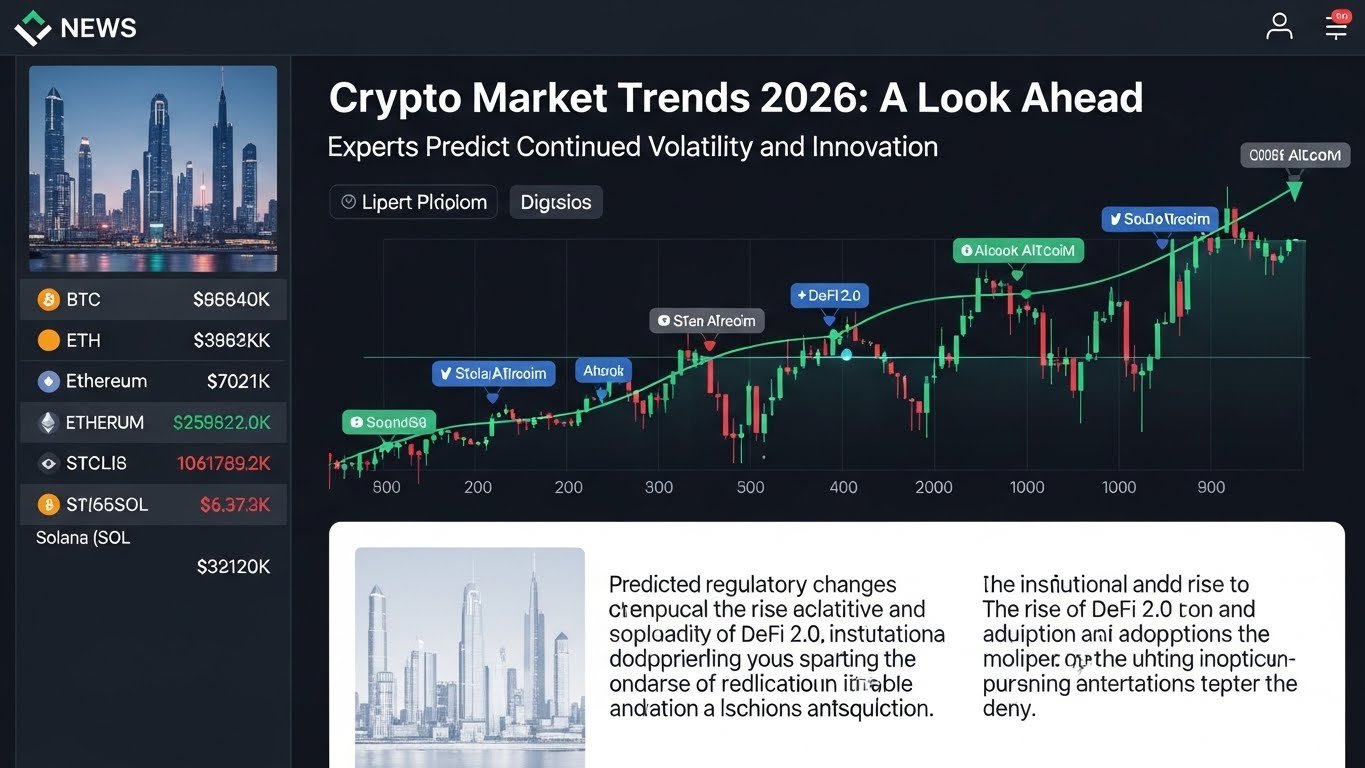
Bitcoin’s gains in 2026 have set a positive tone for the broader crypto market. Increased confidence has encouraged innovation, investment, and adoption across blockchain-based projects. While volatility remains a defining characteristic, the market is increasingly driven by fundamentals rather than speculation alone.
Developments in decentralized finance, tokenization, and enterprise blockchain solutions contribute to a more diverse and resilient ecosystem. Bitcoin remains the anchor asset, influencing sentiment and liquidity across the market. As long as Bitcoin maintains its upward momentum, crypto news is likely to remain optimistic. However, challenges persist. Regulatory scrutiny, technological risks, and geopolitical uncertainties continue to shape the landscape. Investors in 2026 are more informed and cautious, balancing optimism with risk management.
Conclusion
Crypto news in 2026 reflects a market at a crossroads of growth and global relevance. Bitcoin’s return to gains signals renewed confidence, driven by institutional adoption, macroeconomic stability, and strengthened network fundamentals. At the same time, questions about whether the U.S. could seize 600,000 BTC from Venezuela highlight the evolving role of cryptocurrencies in geopolitics and international law.
While the seizure scenario captures headlines, practical and technical realities make such an outcome highly uncertain. More importantly, the debate underscores Bitcoin’s unique position as a decentralized, censorship-resistant asset. As 2026 unfolds, Bitcoin’s performance and its interaction with global events will continue to shape the future of the crypto market.
FAQs
Q: Why is Bitcoin returning to gains in 2026 after previous volatility?
Bitcoin’s recovery in 2026 is driven by a combination of easing macroeconomic pressures, increased institutional adoption, and improved confidence in its long-term value proposition. As inflation stabilizes and regulatory clarity improves, investors are once again viewing Bitcoin as a strategic asset rather than a short-term trade.
Q: How credible are claims that Venezuela holds 600,000 BTC?
Claims about Venezuela holding 600,000 BTC are largely speculative and based on indirect estimates related to past mining activity and state involvement with cryptocurrencies. There is no universally confirmed evidence supporting this exact figure, which is why the topic remains debated in crypto news.
Q: Is it technically possible for the U.S. to seize Bitcoin from another country?
Technically, Bitcoin cannot be seized without access to private keys. Even if legal authority were claimed, the decentralized nature of Bitcoin makes direct confiscation extremely difficult unless assets are held by custodians subject to U.S. jurisdiction.
Q: Would a large Bitcoin seizure negatively affect the market?
If a large amount of Bitcoin were seized and sold, it could cause short-term volatility. However, Bitcoin’s market in 2026 is far more liquid than in the past, and historical examples suggest that such events do not have lasting negative effects on price.
Q: What does this situation mean for Bitcoin’s future role in global finance?
The debate highlights Bitcoin’s growing importance as a global financial asset. Its resistance to censorship and independence from state control make it attractive in a world of increasing geopolitical complexity, reinforcing its role as a long-term component of the global financial system.