The global conversation around cryptocurrency has long been shaped by skepticism from central banks, particularly when it comes to monetary sovereignty and financial stability. However, a significant shift has begun to emerge in Russia. The Central Bank of Russia acknowledges Bitcoin mining as a ruble strengthening activity, signaling a notable evolution in how digital assets are perceived within one of the world’s most resource-rich and geopolitically influential economies. This acknowledgment does not merely reflect a change in tone; it represents a broader reassessment of how decentralized technologies like Bitcoin can coexist with, and even support, national economic objectives.
Russia has historically taken a cautious, sometimes restrictive approach to cryptocurrency. Yet the country also possesses vast energy reserves, cold climates ideal for mining operations, and a strategic need to diversify revenue streams amid global financial pressures. By recognizing Bitcoin mining as a contributor to ruble stability, Russian regulators appear to be reframing crypto mining from a speculative or disruptive activity into an industrial and macroeconomic tool.
This article explores how and why the Central Bank of Russia acknowledges Bitcoin mining as a ruble strengthening activity, the economic logic behind this stance, and its implications for monetary policy, energy markets, and the global crypto ecosystem. Through a detailed examination of policy context, financial mechanisms, and future outlooks, this analysis aims to provide a comprehensive understanding of a development that could reshape the relationship between state currencies and decentralized digital assets.
Understanding the Central Bank of Russia’s Position on Bitcoin
For many years, the Central Bank of Russia maintained a firm stance against widespread cryptocurrency adoption. Bitcoin and similar assets were often framed as risks to financial stability, capital controls, and consumer protection. The concern was that decentralized currencies could undermine the ruble by enabling unregulated capital flight and weakening state oversight of financial transactions. This skepticism aligned with a broader global trend among central banks wary of losing monetary control.
However, even during periods of resistance, Russian authorities differentiated between cryptocurrency trading and Bitcoin mining. While speculative trading raised alarms, mining was increasingly viewed as an industrial process rather than a purely financial one. This distinction laid the groundwork for a more nuanced regulatory approach, especially as external economic pressures intensified.
The acknowledgment that Bitcoin mining can strengthen the ruble reflects a pragmatic reassessment rather than ideological support for decentralization. By focusing on mining’s tangible economic outputs, such as export revenues, energy utilization, and tax potential, the Central Bank of Russia has reframed mining as a productive sector. This shift suggests that Bitcoin mining, when regulated and integrated into the formal economy, can complement national financial goals instead of threatening them.
Why Bitcoin Mining Matters to the Russian Economy
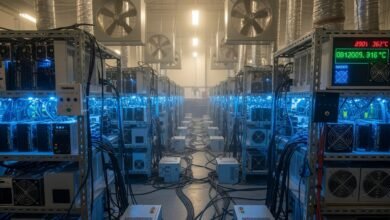
Russia is one of the world’s largest energy producers, with vast reserves of natural gas, coal, hydroelectric power, and nuclear energy. A significant portion of this energy remains underutilized due to geographic constraints or fluctuating demand. Bitcoin mining offers a way to monetize surplus energy by converting it into a globally traded digital asset.
The acknowledgment by regulators highlights how mining can act as an energy sink, stabilizing local grids and improving the efficiency of power generation facilities. By channeling excess energy into mining operations, Russia can reduce waste while generating economic value denominated in Bitcoin, which can later be exchanged or leveraged strategically.
One of the most critical reasons the Central Bank of Russia acknowledges Bitcoin mining as a ruble strengthening activity lies in foreign currency dynamics. Bitcoin mined within Russia can be sold on international markets, generating inflows of foreign currency or assets that are independent of traditional banking systems. These inflows can support the ruble by increasing overall economic resilience and reducing reliance on conventional export channels. In a global environment where sanctions and trade restrictions can limit access to international financial systems, Bitcoin mining provides an alternative mechanism for value creation and exchange. This capability aligns with Russia’s broader goal of enhancing financial sovereignty.
Bitcoin Mining as a Tool for Monetary Resilience

Russia’s economy has long depended on commodities such as oil and gas. While lucrative, this dependence exposes the ruble to volatility driven by global energy prices. Bitcoin mining introduces a form of digital commodity production that is less correlated with traditional markets. The Central Bank’s acknowledgment suggests that diversification into mining can smooth economic fluctuations and contribute to ruble stability.
By treating mined Bitcoin as a strategic asset rather than a speculative instrument, authorities can integrate it into broader monetary planning. This approach reflects an understanding of digital assets as part of a diversified national portfolio.
The idea that Bitcoin mining can strengthen the ruble may seem counterintuitive, given Bitcoin’s decentralized nature. However, the key lies in controlled integration. When mining operations are regulated, taxed, and aligned with national interests, they generate revenue without undermining monetary authority. The ruble benefits indirectly through increased economic activity, employment, and fiscal receipts.
Regulatory Framework and State Oversight
Russia’s regulatory journey with cryptocurrency has been complex. Initial proposals leaned toward outright bans on crypto transactions. Over time, these proposals evolved into frameworks that differentiate between usage, trading, and mining. The Central Bank’s acknowledgment marks a culmination of this evolution, emphasizing regulation over prohibition. By establishing clear rules for mining operations, including licensing, energy pricing, and taxation, the state can harness the benefits of mining while mitigating risks. This approach reflects a broader global trend where governments seek to regulate rather than eliminate crypto-related activities.
Recognizing Bitcoin mining as a ruble strengthening activity also opens the door to structured taxation. Mining firms can contribute to public revenues through corporate taxes, energy fees, and export duties. These fiscal benefits further reinforce the ruble by strengthening the state’s financial position. The Central Bank’s stance suggests that when mining revenues are transparently accounted for, they become a stabilizing rather than destabilizing force within the economy.
Geopolitical Implications of Bitcoin Mining in Russia
In an era of heightened geopolitical tensions, Russia faces constraints on its access to traditional financial systems. Bitcoin mining offers a degree of insulation from these pressures by enabling value generation outside conventional channels. The acknowledgment by the Central Bank reflects an understanding of mining’s strategic utility in this context. While Bitcoin itself is volatile, its global liquidity and decentralized nature make it a useful tool for economic continuity. This does not imply a replacement of the ruble but rather a complementary mechanism that enhances resilience.
By embracing regulated mining, Russia positions itself as a major player in the global crypto infrastructure. This role carries influence over network security, hash rate distribution, and technological development. The Central Bank’s recognition underscores the strategic importance of maintaining a strong presence in the global Bitcoin mining landscape.
Environmental and Technological Considerations
One of the common criticisms of Bitcoin mining is its environmental impact. Russia’s energy mix, which includes significant low-carbon sources such as hydro and nuclear power, offers an opportunity to address these concerns. By directing mining operations toward cleaner energy sources, Russia can position itself as a leader in sustainable mining. The Central Bank’s acknowledgment implicitly supports the idea that mining can be aligned with environmental goals when managed responsibly. Bitcoin mining requires advanced hardware, data centers, and cooling systems. Investment in these areas drives technological innovation and infrastructure development. This technological spillover benefits other sectors of the economy, contributing to long-term growth and ruble stability.
Economic Risks and Challenges
Despite its potential benefits, Bitcoin mining is not without risks. Bitcoin’s price volatility can affect the stability of revenues generated through mining. The Central Bank’s acknowledgment does not eliminate these risks but suggests that they can be managed through diversification and prudent policy. By viewing mining as one component of a broader economic strategy, rather than a sole pillar, authorities can mitigate exposure to market fluctuations. Another challenge lies in balancing state control with innovation. Overregulation could stifle the very benefits mining offers, while underregulation could reintroduce risks. The Central Bank’s evolving stance indicates an awareness of this balance and a willingness to adapt policies as the sector matures.
The Broader Impact on Russian Monetary Policy

The acknowledgment that Bitcoin mining strengthens the ruble signals a broader rethinking of digital assets within monetary policy. Rather than viewing Bitcoin solely as a competitor to fiat currency, Russian authorities appear to recognize its utility as an economic instrument. This perspective aligns with global discussions around central bank digital currencies and the future of money, where coexistence rather than replacement is increasingly emphasized.
Ultimately, the Central Bank of Russia’s position reflects a long-term strategic vision. By integrating Bitcoin mining into the formal economy, Russia can leverage technological change to reinforce, rather than undermine, its national currency. This approach underscores a pragmatic understanding of global financial evolution.
Conclusion
The statement that the Central Bank of Russia acknowledges Bitcoin mining as a ruble strengthening activity marks a pivotal moment in the intersection of state finance and decentralized technology. Far from endorsing unchecked crypto adoption, this acknowledgment reflects a calculated recognition of mining’s economic, strategic, and monetary value. By leveraging abundant energy resources, generating foreign asset inflows, and fostering technological innovation, Bitcoin mining can contribute to ruble stability when properly regulated. This development illustrates a broader trend in which governments reassess digital assets not as existential threats but as tools that, when aligned with national interests, can enhance economic resilience. As Russia continues to refine its regulatory framework, the global community will closely watch how this approach influences both the ruble and the future of Bitcoin mining worldwide.
FAQs
Q: How does Bitcoin mining contribute to strengthening the ruble according to the Central Bank of Russia?
Bitcoin mining contributes by generating economic value from surplus energy, creating foreign asset inflows, and supporting industrial activity. When these revenues are integrated into the formal economy through regulation and taxation, they enhance overall economic resilience, indirectly supporting the ruble’s stability.
Q: Why has the Central Bank of Russia changed its stance on Bitcoin mining compared to cryptocurrency trading?
The shift reflects a distinction between speculative financial activity and industrial production. While cryptocurrency trading raises concerns about capital flight, mining is seen as a productive use of resources that can generate tangible economic benefits under state oversight.
Q: What role do Russia’s energy resources play in this policy shift?
Russia’s vast and often underutilized energy resources make Bitcoin mining economically attractive. By converting surplus energy into digital assets, mining improves energy efficiency and creates value that supports national economic objectives.
Q: Are there risks associated with relying on Bitcoin mining for economic support?
Yes, risks include Bitcoin price volatility and potential environmental concerns. However, these risks can be managed through diversification, sustainable energy use, and prudent regulation, which is why mining is viewed as a complementary rather than primary economic tool.
Q: Could this acknowledgment influence other countries’ approaches to Bitcoin mining?
The Central Bank of Russia’s stance may encourage other energy-rich nations to reconsider Bitcoin mining as a strategic industry. By demonstrating that regulated mining can align with national currency goals, Russia could influence broader global policy discussions around crypto and monetary sovereignty.