Bitcoin Mining Gets a New Narrative After Nvidia CEO Reframes Energy Use
Bitcoin mining enters a new era as Nvidia’s CEO reframes energy use, shifting the narrative toward efficiency, innovation, and sustainable growth.

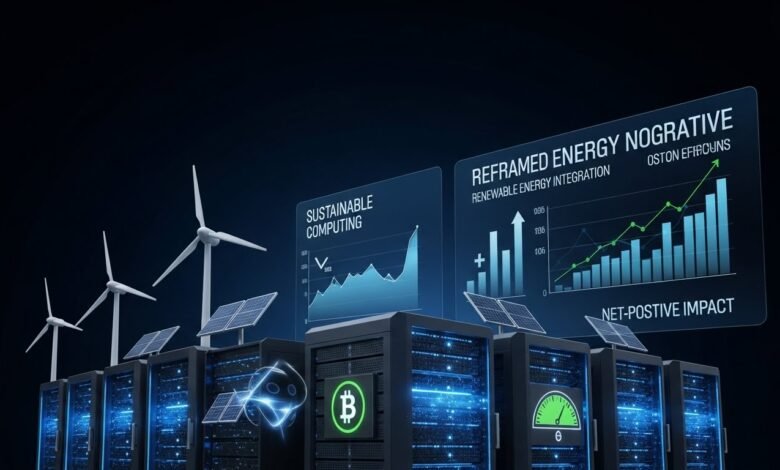
For years, Bitcoin mining has been framed almost entirely through a negative lens, dominated by concerns over energy consumption, environmental impact, and sustainability. Headlines often reduce the industry to a single talking point: power usage. This narrow framing has shaped public opinion, regulatory debates, and even investment decisions. However, the narrative around Bitcoin mining is beginning to shift, and a surprising catalyst has emerged from outside the crypto industry itself. When the Nvidia CEO recently reframed the discussion around energy use and computational demand, it introduced a more nuanced perspective that challenges long-standing assumptions about how energy-intensive technologies should be evaluated.
This new narrative does not deny that Bitcoin mining consumes energy. Instead, it contextualizes energy use as a function of value creation, efficiency improvements, and technological evolution. By drawing parallels between artificial intelligence workloads, high-performance computing, and decentralized networks, the conversation moves away from simplistic judgments toward a more informed analysis. As a result, Bitcoin mining energy use is increasingly seen as part of a broader digital infrastructure ecosystem rather than an isolated problem.
Nvidia’s reframing of energy consumption has influenced perceptions of Bitcoin mining, why this shift matters for the future of the industry, and how it could reshape regulation, investment, and innovation. By examining technological efficiency, grid integration, and economic incentives, we uncover why Bitcoin mining may be entering a new phase of legitimacy and understanding.
The Old Narrative Around Bitcoin Mining and Energy Use
Why Bitcoin Mining Was Seen as an Energy Problem
The early growth of Bitcoin coincided with rising global awareness about climate change and sustainability. As mining difficulty increased, so did electricity consumption, leading to alarming comparisons between Bitcoin and entire countries in terms of power usage. These comparisons, while attention-grabbing, often lacked context. They focused on raw consumption figures without considering energy sources, efficiency gains, or economic value produced.
This framing positioned Bitcoin mining energy consumption as inherently wasteful, reinforcing the idea that decentralized consensus mechanisms were incompatible with environmental responsibility. Critics argued that proof-of-work systems represented outdated technology in a world moving toward greener alternatives. As a result, Bitcoin mining became a convenient symbol of excess in the digital age.
Media Simplification and Its Consequences
Mainstream media coverage frequently reduced complex energy discussions into simplified narratives. Articles rarely distinguished between renewable and non-renewable energy usage or acknowledged regional differences in mining operations. This oversimplification influenced policymakers and the public alike, creating pressure for bans and restrictive regulations.
The lack of nuance also discouraged constructive dialogue. Instead of asking how mining could become more efficient or how it might support energy infrastructure, the conversation focused on whether it should exist at all. This adversarial framing slowed innovation and ignored potential benefits embedded within the technology.
Nvidia CEO’s Perspective on Energy and Computation
Reframing Energy Use as Value Creation
The Nvidia CEO’s comments introduced a critical shift in perspective by emphasizing that energy consumption should be evaluated relative to the value it generates. High-performance computing, artificial intelligence, and data centers all consume vast amounts of electricity, yet they are widely accepted because of their economic and societal contributions.
By placing Bitcoin mining within this same framework, the discussion changes fundamentally. Mining is no longer judged solely on how much power it uses but on what it enables. Decentralized finance, secure global transactions, and censorship-resistant systems represent tangible outputs that justify energy investment, similar to other computationally intensive industries.
Parallels With AI and Data Centers
Artificial intelligence workloads are among the most energy-intensive computing tasks today. Training large language models and running advanced simulations require enormous processing power. Yet, these activities are celebrated as drivers of innovation rather than criticized for their energy demands.
This comparison highlights a double standard. When energy use supports centralized corporate innovation, it is framed as progress. When it supports decentralized networks like Bitcoin, it is framed as waste. Nvidia’s reframing challenges this inconsistency and encourages a more balanced evaluation of Bitcoin mining sustainability.
How This Shift Impacts the Bitcoin Mining Industry
Changing Investor Sentiment
Narratives shape markets, and the evolving perception of Bitcoin mining is influencing investor behavior. As energy use is reframed within a value-based context, institutional investors become more willing to engage with mining-related assets. The focus shifts toward efficiency, infrastructure, and long-term viability rather than existential risk.
This shift encourages capital inflows into advanced mining hardware, renewable integration, and grid-optimized operations. Over time, these investments reinforce a positive feedback loop where efficiency improvements further validate the new narrative.
Influence on Public Perception
Public understanding of Bitcoin mining has long lagged behind technological reality. Nvidia’s perspective helps bridge this gap by using familiar concepts from the tech industry. When mining is compared to AI computing rather than environmental destruction, it becomes easier for non-technical audiences to grasp its role.
This improved understanding reduces resistance and opens the door to more informed discussions about regulation, sustainability, and innovation. Bitcoin mining energy efficiency becomes a topic of optimization rather than condemnation.
Technological Evolution and Energy Efficiency in Bitcoin Mining
Advances in Mining Hardware
Modern mining hardware bears little resemblance to early setups. Specialized application-specific integrated circuits are designed to maximize hash rate while minimizing energy consumption. Each generation delivers significant efficiency gains, reducing the energy cost per unit of computational work.
These improvements align with Nvidia’s broader message about computational progress. Just as GPUs evolve to handle AI workloads more efficiently, mining hardware evolves to deliver greater security with less power. This ongoing innovation challenges outdated assumptions about static energy usage.
Software Optimization and Network Adjustments
Beyond hardware, software optimization plays a critical role in reducing energy waste. Mining pools, firmware updates, and network-level improvements contribute to more efficient operations. These changes are often overlooked in public discussions but are central to the industry’s sustainability efforts.
By focusing on efficiency metrics rather than absolute consumption, stakeholders gain a clearer picture of how Bitcoin mining technology continues to mature.
Renewable Energy and Bitcoin Mining
Integration With Renewable Sources
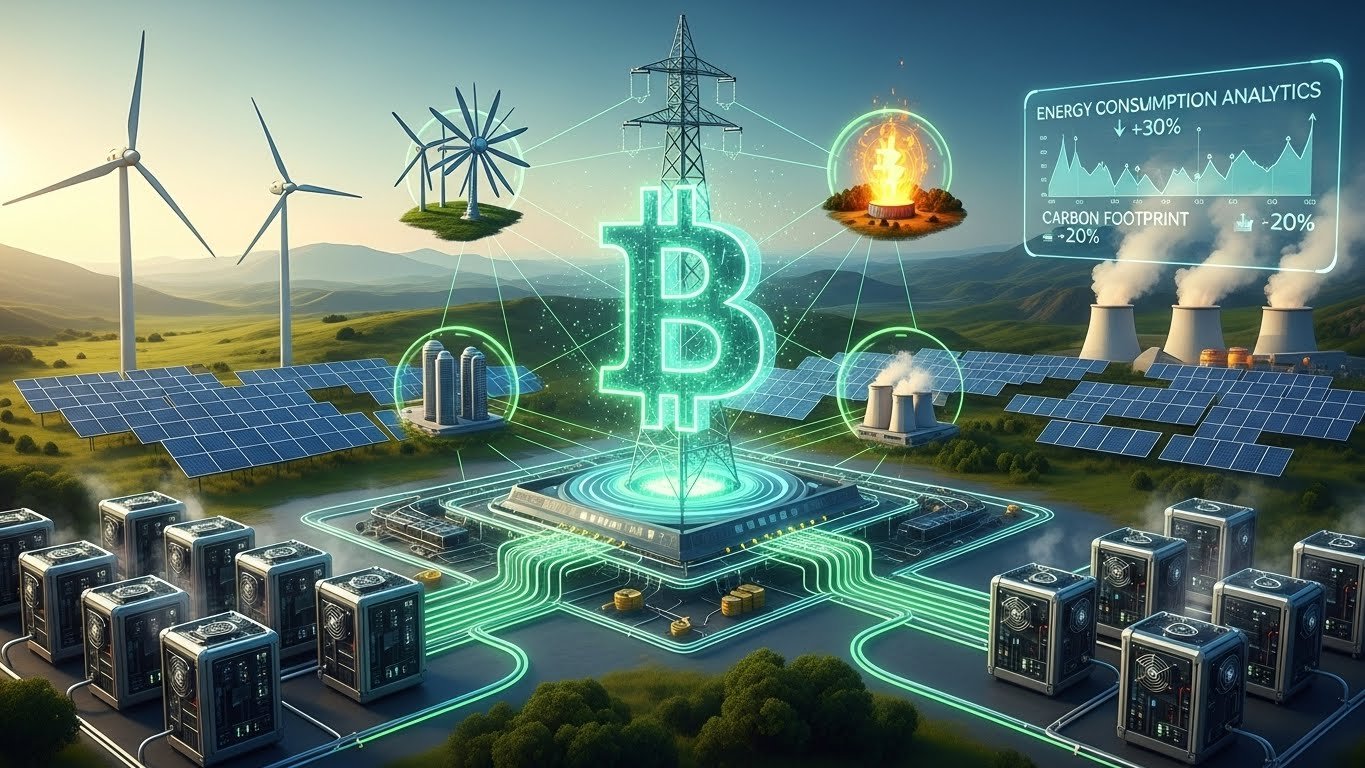
One of the most significant developments in Bitcoin mining is its growing reliance on renewable energy. Miners are increasingly locating operations near hydroelectric, solar, and wind sources to reduce costs and environmental impact. This trend aligns economic incentives with sustainability goals.
Unlike traditional industries, mining operations are highly mobile. This flexibility allows them to follow renewable energy availability, turning excess generation into economic output. Such integration supports grid stability and improves renewable project viability.
Utilizing Stranded and Excess Energy
Bitcoin mining can monetize stranded energy that would otherwise be wasted. Examples include flared natural gas and surplus renewable generation during off-peak periods. By converting unused energy into digital assets, miners create value without increasing overall consumption.
This approach reframes Bitcoin mining energy use as an efficiency mechanism rather than a drain, supporting Nvidia’s broader argument about contextual evaluation.
Regulatory Implications of the New Narrative
Shifting Policy Discussions
As narratives evolve, so do regulatory approaches. Policymakers who once considered outright bans may now explore frameworks that encourage efficient and sustainable mining practices. Instead of focusing on prohibition, regulation can incentivize renewable integration and technological innovation.
This shift benefits both governments and industry participants by aligning economic development with environmental goals. Clear, informed regulation also reduces uncertainty, fostering long-term investment.
Encouraging Transparency and Standards
The new narrative emphasizes accountability rather than suppression. Standards for energy reporting, efficiency benchmarks, and renewable usage can help legitimize the industry. Transparency builds trust and allows regulators to distinguish responsible operators from outliers. By embracing these standards, the Bitcoin mining sector strengthens its position within the global energy conversation.
Bitcoin Mining in the Broader Digital Economy
Supporting Decentralized Infrastructure
Bitcoin mining underpins a decentralized financial system that operates independently of traditional institutions. This infrastructure provides resilience, security, and accessibility, particularly in regions with unstable financial systems. Evaluating energy use without considering these benefits leads to incomplete conclusions. Nvidia’s reframing encourages stakeholders to assess mining as part of a larger digital ecosystem rather than an isolated activity.
Economic and Social Impact
Beyond finance, Bitcoin mining contributes to local economies through job creation, infrastructure investment, and energy development. Mining facilities often revitalize underutilized regions by bringing demand to areas with excess power capacity. These socioeconomic factors reinforce the argument that Bitcoin mining sustainability extends beyond carbon metrics to include broader measures of value.
The Role of Narratives in Technological Adoption
Why Narratives Matter
Technological adoption is driven as much by perception as by performance. Narratives influence funding, regulation, and public acceptance. The shift introduced by Nvidia’s CEO demonstrates how reframing can unlock new opportunities for misunderstood technologies. By aligning Bitcoin mining with established computing paradigms, the industry gains credibility and legitimacy in mainstream discourse.
Long-Term Implications for Bitcoin
As narratives stabilize, Bitcoin mining can focus on incremental improvement rather than constant defense. This stability supports innovation, collaboration, and integration with global energy systems. Over time, the industry may serve as a model for how energy-intensive technologies can evolve responsibly within modern economies.
Conclusion
The reframing of energy use by Nvidia’s CEO marks a turning point in how Bitcoin mining is understood and evaluated. By shifting the focus from raw consumption to value creation, efficiency, and technological progress, the conversation becomes more balanced and informed. This new narrative does not ignore environmental concerns but contextualizes them within a broader digital and economic framework.
As mining hardware becomes more efficient, renewable integration expands, and regulatory approaches mature, Bitcoin mining emerges as a dynamic component of the global energy and technology landscape. The industry’s future will depend not only on innovation but on continued efforts to communicate its value clearly and responsibly. With a more nuanced narrative taking hold, Bitcoin mining is poised to move beyond controversy and into a phase of constructive evolution.
FAQs
Q: How did Nvidia’s CEO influence the Bitcoin mining energy narrative?
Nvidia’s CEO influenced the narrative by emphasizing that energy consumption should be assessed based on the value it generates rather than viewed in isolation. By comparing Bitcoin mining to other high-performance computing workloads like artificial intelligence and data centers, the discussion shifted toward efficiency, innovation, and economic contribution. This perspective challenged the idea that energy-intensive systems are inherently wasteful and encouraged a more balanced evaluation of Bitcoin mining.
Q: Why is Bitcoin mining often criticized for energy use compared to other technologies?
Bitcoin mining has been criticized largely due to simplified comparisons that focus on total electricity consumption without context. Other technologies such as AI computing and cloud data centers also consume massive amounts of energy but are framed as drivers of progress. The criticism stems from a lack of understanding of mining’s economic value, energy sources, and efficiency improvements, which are now gaining more attention.
Q: Can Bitcoin mining actually support renewable energy development?
Yes, Bitcoin mining can support renewable energy by providing a flexible demand source that absorbs excess generation. Miners often operate near renewable facilities and utilize surplus energy that might otherwise be wasted. This capability improves the economics of renewable projects and helps stabilize power grids, aligning mining incentives with sustainability goals.
Q: How does improved efficiency change the environmental impact of Bitcoin mining?
Improved efficiency reduces the amount of energy required to secure the network per unit of computational work. Advances in hardware, software optimization, and energy management mean that modern mining operations achieve significantly higher output with less power. Over time, these gains lower the environmental footprint and reinforce the argument that mining is becoming more sustainable.
Q: What does the new narrative mean for the future of Bitcoin mining regulation?
The new narrative encourages regulators to move away from bans and toward constructive frameworks that promote transparency, efficiency, and renewable integration. By understanding mining within the context of value creation and technological evolution, policymakers can design regulations that balance environmental concerns with economic innovation, supporting responsible growth in the industry.