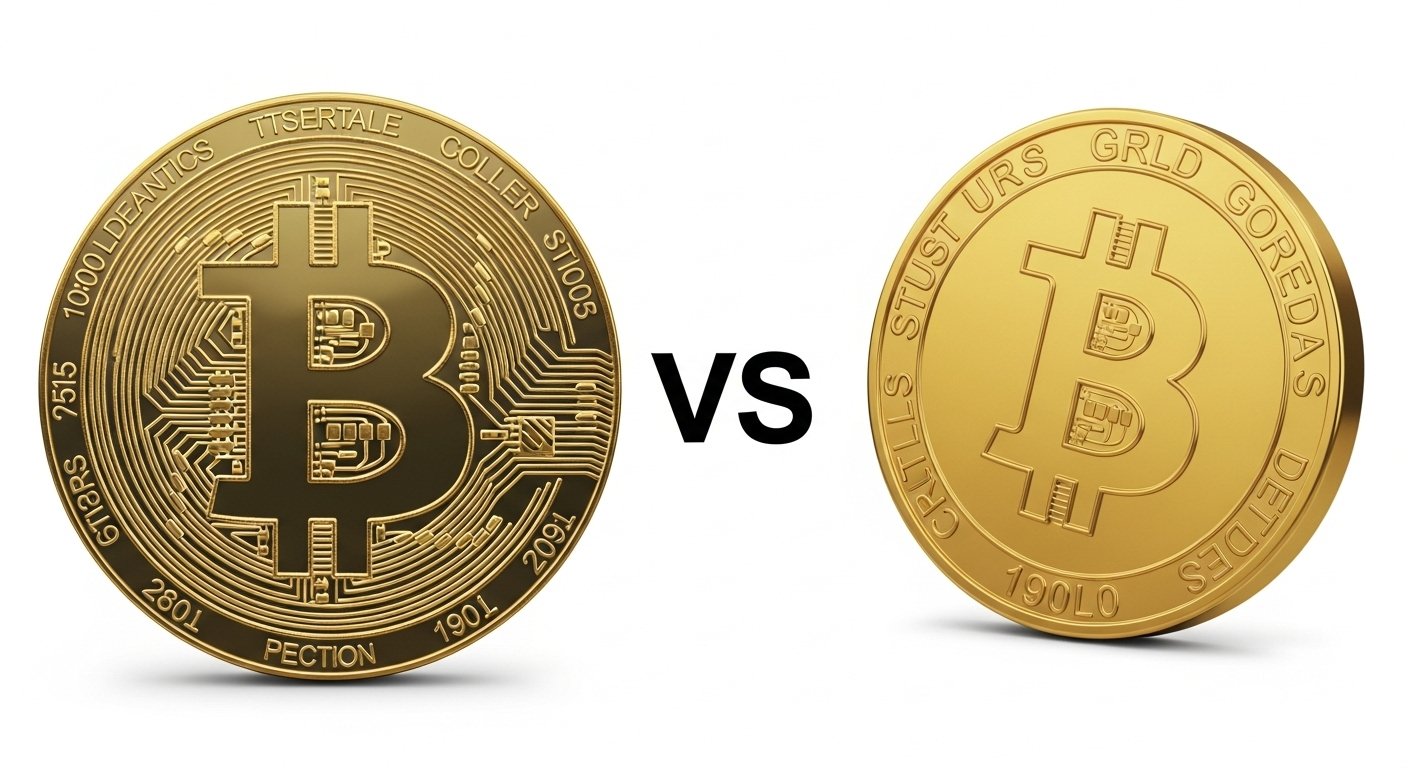
For years, investors treated crypto and gold as two very different worlds. Gold was the classic safe haven: heavy, physical, and rooted in centuries of monetary history. Crypto was the new frontier: fast, digital, and volatile. Then Tether sat down right in the middle and quietly built a bridge between them.
Best known for USDT, the world’s largest stablecoin by market capitalization and trading volume, Tether has evolved into a multi-asset issuer that also manages Tether Gold (XAU₮), a token backed by physical gold bars. Together, those products sit at the point where crypto and gold collide, combining the liquidity and programmability of digital tokens with the perceived safety and familiarity of traditional stores of value.
This mix is not just a branding exercise. Tether’s reserves now include significant holdings in gold and Bitcoin, alongside cash and U.S. Treasuries, and the company has become a major buyer of both assets through its reserve management strategy. That makes Tether a key player not only in stablecoins but also in the emerging world of tokenized gold and hybrid reserve models.
In this in-depth guide, we will explore how Tether became the de facto backbone of crypto liquidity, how Tether Gold tries to bring bullion on-chain, what it means when a stablecoin issuer is also a big gold holder, and how this convergence could shape the future of money.
The Rise of Tether: From Dollar Peg to Reserve Giant
USDT: The Stablecoin That Became Crypto’s Settlement Layer
Launched in 2014, Tether’s original product was a simple idea with massive consequences: a token pegged to the U.S. dollar that could move across blockchains as easily as any cryptocurrency. That token, USDT, now trades on multiple networks, from Ethereum and Tron to Solana and others, and has grown into the largest stablecoin in existence.
By late 2025, USDT’s market capitalization is consistently above 110–120 billion dollars, making it one of the largest digital assets in the world and the dominant source of dollar liquidity in crypto trading. On many centralized exchanges and DeFi platforms, USDT is the default quote currency for Bitcoin, altcoins, and even other stablecoins.
The key promise of Tether (USDT) is stability: each token aims to track one U.S. dollar, backed by reserves that Tether publishes in periodic attestation reports by third-party auditors. Those reserves have evolved dramatically over time, shifting from opaque cash-equivalent claims toward a portfolio dominated by short-term U.S. Treasuries, cash, and other high-quality assets, plus an expanding allocation to gold and Bitcoin as part of Tether’s surplus management. This reserve composition is where the collision between crypto and gold starts to become tangible.
From Controversy to Cash Machine
Tether’s rise has not been without controversy. For years, critics questioned whether USDT was fully backed, and regulators scrutinized Tether’s disclosures and relationships with exchanges. Settlements with U.S. authorities required the company to improve transparency and reporting, and the stablecoin issuer now provides quarterly attestation reports and more detailed breakdowns of its reserve holdings.
Those reports show that Tether is not just big; it is incredibly profitable. High interest rates on tens of billions of dollars in U.S. Treasuries, plus returns from Bitcoin and gold holdings, have turned the company into what some analysts describe as a “shadow central bank of crypto,” with billions in annual net profits generated from its reserve portfolio.
As reserves ballooned, Tether began to channel part of its net profit into strategic assets such as physical gold and Bitcoin, positioning itself as a unique hybrid treasury that sits at the nexus of traditional and digital stores of value. That, in turn, set the stage for Tether Gold to become a flagship product in the crossover between crypto and bullion.
Tether Gold (XAU₮): Digital Bullion on the Blockchain
What Is Tether Gold (XAU₮)?
Tether Gold, ticker XAU₮, is a tokenized gold product launched by Tether to represent ownership of physical gold bars stored in secure vaults. Each XAU₮ token is designed to correspond to one troy ounce of fine gold held in a Swiss vault controlled by Tether’s custodian. Holders can verify serial numbers of the underlying bars and, subject to conditions like minimum redemption amounts and fees, can theoretically redeem tokens for actual gold.
The idea behind Tether Gold is simple but powerful: bring the qualities of physical gold—scarcity, history, perceived safety—into the digital realm, while letting investors transfer, trade, or collateralize gold-backed tokens 24/7 on blockchain rails. In doing so, Tether joins a growing field of gold-backed stablecoins and tokenized commodities, but XAU₮ benefits from Tether’s existing infrastructure, relationships with exchanges, and understanding of reserve management.
How XAU₮ Differs From USDT and Other Stablecoins

On the surface, USDT and XAU₮ share a similar model: tokens backed by off-chain assets, with attestations and redemption processes. Under the hood, there are important differences. USDT is pegged to the U.S. dollar and is designed primarily as a medium of exchange and settlement instrument inside the crypto ecosystem. XAU₮, by contrast, is tied to the spot price of gold, making it more of an investment and store-of-value token than everyday transactional money.
While USDT’s backing includes a diversified reserve portfolio (largely Treasuries and cash), XAU₮ is explicitly backed by physical gold bars, and its supply grows or shrinks as investors purchase or redeem tokenized gold. This means that Tether Gold sits at the precise intersection suggested by the article’s title: it is where Tether, crypto and gold collide, combining the company’s expertise in running large tokenized asset systems with the centuries-old appeal of gold as a reserve asset.
Why Tether Is Loading Up on Gold
The story does not end with XAU₮. Tether’s own reserve reports show that the company has been actively adding gold to its balance sheet as part of its surplus management, separate from the gold that backs Tether Gold tokens.
Gold as a Strategic Reserve Asset
In 2023 and 2024, Tether’s attestation reports began to reveal a growing allocation to physical gold. The company explicitly framed this as part of a diversification strategy aimed at holding non-correlated assets and building resilience into its reserves. Over time, Tether’s holdings of gold have reached billions of dollars, making it a notable participant in global bullion markets, even if still small relative to central banks.
From a risk-management perspective, gold plays a familiar role: it is seen as a hedge against inflation, currency devaluation, and extreme financial stress. For a company whose main product – USDT – must maintain stability in all conditions, having some exposure to gold alongside Treasuries and cash offers psychological and potentially practical benefits.
Gold also connects Tether more directly with the traditional safe-haven narrative. While crypto markets can be notoriously volatile, gold-backed tokens and gold-heavy reserves give Tether another story to tell: that behind the digital tokens lies not just fiat debt but also hard assets with centuries of monetary history.
How Gold in Reserves Affects Trust in Tether
Trust has always been Tether’s key challenge. Critics argue that complex reserve compositions make it harder to assess the true risk profile of USDT. Supporters counter that a mix of cash, Treasuries, gold, and Bitcoin is more robust than a pure fiat backing, especially in an era of aggressive monetary experimentation.
By publicizing its gold holdings, Tether is effectively saying: “We are not just holding paper; we are holding real assets.” This can resonate with investors who view gold as the ultimate anchor of value, especially in regions where local currencies have been unstable or capital controls are strict.
At the same time, using gold as a reserve asset ties Tether into some of the same debates that central banks and sovereign wealth funds face. How much gold is enough? How liquid is that gold in a crisis? What happens if gold prices fluctuate sharply while USDT must remain pegged to the dollar? Those questions underscore the delicate balancing act of being both a crypto stablecoin issuer and a gold-holding reserve manager.
Where Crypto and Gold Collide: Use Cases and Market Behavior
Digital Gold vs. Digital Dollar

For many investors, USDT and XAU₮ represent two ends of a spectrum. USDT is the digital dollar of crypto, used for trading, arbitrage, remittances, and DeFi strategies. XAU₮ is more analogous to a digital gold coin, used for longer-term holding, diversification, or hedging.
During risk-on periods, traders may hold more USDT and volatile assets like Bitcoin or altcoins, using USDT as a base currency for speculative activity. During risk-off episodes, some investors rotate into gold-backed tokens like XAU₮ to preserve value while still keeping funds on-chain.
Because both tokens share Tether’s infrastructure, moving between them is often easier than moving between cryptocurrencies and traditional gold ETFs or bullion. This is where crypto and gold collide in a practical sense: a trader can cash out of a DeFi position into XAU₮ instead of USDT, shifting exposure from the dollar to gold without leaving the blockchain environment.
Tether’s Role in Global Liquidity
Beyond individual portfolios, Tether sits at the center of global crypto liquidity. USDT provides deep dollar liquidity to exchanges in Asia, the Middle East, Latin America, and other regions where access to U.S. banking is limited. In many of these markets, gold has historically played a major role as a store of value and a medium of exchange.
By offering both USDT and Tether Gold, Tether is effectively recreating a modern version of an old pattern: people move between cash and gold, only now they do it with tokens. This fusion of digital dollars and digital gold creates new possibilities for cross-border payments, savings strategies, and even on-chain collateral for loans.
The collision is also macro-economic. As Tether buys more gold and Bitcoin for reserves, it becomes a non-sovereign player in global capital flows, alongside central banks, funds, and large corporations. Its decisions about how much gold to hold, how much USDT to issue, and how to manage surplus profit have ripple effects well beyond crypto charts.
Benefits and Risks of Tether’s Gold Strategy
No analysis of “Tether: where crypto and gold collide” would be complete without weighing the benefits and risks of this hybrid model.
Potential Benefits: Diversification, Stability, and New Products
On the positive side, Tether’s embrace of gold offers several potential advantages. First, it diversifies the company’s reserves. In a world where government debt can be volatile and bank exposures can be risky, holding a tranche of gold can reduce dependence on any single asset class. For users of USDT, this may translate into greater confidence that Tether can weather extreme financial shocks.
Second, gold-backed tokens like Tether Gold (XAU₮) create new opportunities for investors who want both the stability of gold and the flexibility of crypto. They can use gold as collateral in DeFi, trade it 24/7, and integrate it into algorithmic strategies that were impossible with physical bullion alone.
Third, Tether’s model opens the door to a broader family of asset-backed tokens, where real-world stores of value – from gold and silver to treasuries and commodities – are represented on-chain with transparent reserve reporting. In that sense, Tether’s approach is a step toward a more interoperable financial system in which gold and crypto coexist rather than compete.
Key Risks: Transparency, Complexity, and Systemic Importance
The risks, however, are equally real. One major concern is transparency. Although Tether has improved its disclosures, its reserves are still more complex than a simple 100% cash model. Investors must trust that gold holdings are accurately reported, properly stored, and easily liquidated if needed. Unlike cash, gold is not instantly convertible at par value, especially in extreme market conditions.
Another risk is complexity. As Tether’s reserve mix expands to include more gold, Bitcoin, and other assets, the relationship between USDT tokens and underlying reserves becomes more intricate. Evaluating the true risk profile requires sophisticated analysis, and not all users have the time or expertise to parse audit reports and balance sheets.
Finally, Tether’s sheer size creates systemic importance. With USDT dominating stablecoin markets, any misstep in reserve management – including gold allocations – could have market-wide consequences. If gold prices move drastically, or if redemption demands spike while a large portion of reserves is held in less liquid assets, the system could be stress-tested in ways that are hard to model. These risks do not necessarily negate the benefits of Tether’s gold strategy, but they highlight why regulators, traders, and on-chain analysts pay such close attention to every new reserve report.
The Future: Will Gold-Backed Stablecoins Go Mainstream?
Looking ahead, the convergence of Tether, crypto and gold raises a larger question: will gold-backed tokens and mixed-reserve stablecoins become mainstream parts of global finance?
Tokenized Gold as a Bridge Asset
Tokenized gold like Tether Gold (XAU₮) has a unique advantage as a bridge asset. It is familiar to regulators and investors as a centuries-old store of value, but it also fits neatly into the digital asset future. Governments exploring central bank digital currencies (CBDCs), banks experimenting with tokenized securities, and fintechs building cross-border payment rails can all understand gold’s role in a way that pure crypto sometimes struggles to achieve.
As on-chain infrastructure improves, tokenized gold could become one of the most widely accepted collateral types in DeFi, cross-chain bridges, and tokenized capital markets. In that scenario, Tether’s early move into Tether Gold and gold reserves might give it a strategic foothold in the next phase of digital finance, beyond simple dollar stablecoins.
A Multi-Asset Reserve World
The longer-term implication is that the world may move toward multi-asset reserve systems, where fiat currencies, gold, and cryptocurrencies coexist within the same digital frameworks. Tether is arguably an early prototype of such a system: it issues dollar-pegged tokens, holds gold and Bitcoin, manages Treasuries, and offers tokenized bullion.
In a multi-asset future, users might hold portfolios of USDT, XAU₮, BTC, and other tokenized assets in a single wallet, shifting allocations in real time based on macro conditions, personal risk appetite, and yield opportunities. If that vision materializes, “Tether: where crypto and gold collide” will look less like a catchy title and more like an early description of how digital finance actually works.
Conclusion
Tether’s journey from a simple dollar-pegged token to a multi-asset digital reserve giant has fundamentally changed the relationship between crypto and gold. Through USDT, the company has become the dominant provider of on-chain dollar liquidity. Through Tether Gold (XAU₮) and its own gold holdings, it has inserted physical bullion into the heart of the crypto ecosystem.
This collision of Tether, crypto and gold offers clear benefits: diversified reserves, new tokenized gold products, and more ways for investors to move between digital dollars and digital bullion. It also introduces new risks: greater complexity, dependence on Tether’s reserve discipline, and systemic importance that reaches far beyond any individual blockchain.
As stablecoins evolve, tokenization expands, and institutional players grow more comfortable with on-chain assets, Tether’s experiment at the intersection of crypto and gold may prove to be a preview of a wider shift toward multi-asset digital reserve systems. For now, one thing is clear: if you want to understand how digital dollars and digital gold might coexist in the next decade, you cannot ignore Tether’s role as the place where those two worlds collide.
FAQs
Q: What is Tether and how is it connected to gold?
Tether is a company best known for issuing USDT, a dollar-pegged stablecoin widely used in crypto trading and payments. It is connected to gold through Tether Gold (XAU₮), a token backed by physical gold bars, and through the gold allocations in its own reserve portfolio. Together, these products position Tether at the intersection of crypto stablecoins and gold-backed digital assets.
Q: How does Tether Gold (XAU₮) work?
Tether Gold (XAU₮) is a token that represents ownership of a specific amount of physical gold held in a custodian’s vault, typically in Switzerland. Each token corresponds to one troy ounce of fine gold. Holders can trade XAU₮ on supported exchanges, transfer it on-chain, and, subject to terms and minimums, redeem it for physical gold or its cash equivalent, allowing them to access gold exposure within the crypto ecosystem.
Q: Why is Tether adding gold to its reserves?
Tether adds gold to its reserves as part of a diversification strategy. By holding physical gold alongside U.S. Treasuries, cash, and Bitcoin, Tether aims to reduce reliance on any single asset class and enhance resilience during periods of financial stress. Gold is viewed as a long-term store of value and hedge against inflation or currency risk, which can support confidence in USDT’s backing.
Q: Is holding Tether Gold safer than holding USDT?
“Safer” depends on what risk you are trying to hedge. Tether Gold (XAU₮) is tied to the price of gold, so its value can fluctuate with the gold market but is not directly exposed to dollar inflation. USDT is designed to track the U.S. dollar, making it more suitable for stable pricing and everyday transactions in crypto. Both depend on Tether’s reserve management and custodial arrangements, so users must consider counterparty risk, gold price volatility, and the purpose of their holdings.
Q: Could gold-backed stablecoins replace traditional gold investments?
Gold-backed stablecoins like Tether Gold are unlikely to completely replace traditional gold investments, but they can complement them. For investors who value liquidity and programmability, tokenized gold offers advantages over physical bullion or some gold ETFs, such as 24/7 trading and on-chain integration with DeFi. However, some investors may still prefer direct physical ownership or regulated securities in certain jurisdictions. Over time, tokenized gold could become a standard option alongside bars, coins, and ETFs in diversified portfolios.